The Secret Language of Vernazza: The Stories Behind Our Apartment Names
From a medieval windmill to a woman with a voice like a cathedral — how the local dialect lives on in the places where you sleep
By Cinque Terre Riviera · With thanks to Bartolomeo “Tofa” Basso, poet and keeper of Vernazza’s memory
📌 When you stay in one of our Vernazza apartments, you are not just renting a room with a sea view. You are sleeping inside a word — a name that has been spoken in the local dialect for centuries, carrying with it the smell of the sea, the weight of fishing nets, the sound of the church bell at seven. This is the story of those names.
🧓 Tofa: the living memory of Vernazza
His name is Bartolomeo Basso, but everyone in Vernazza knows him as Tofa. Born on the 29th of February 1928 — a leap year, as if even his birthday refused to follow ordinary rules — he has spent nearly a century in this village and has never wanted to leave. “I simply cannot see myself in a city,” he says.
Tofa is a radiotelegraphist, a former stationmaster, a lifelong choir director, and above all a poet. Since 1980 he has been writing verses in the Vernazza dialect — the vernacolo — with the stated aim of making people smile and, as he puts it, “reflect just a little.” For twenty years he taught the local dialect in the village primary school. Today he is 97 years old, still sharp, still ironic, still the keeper of a language that exists nowhere else on earth.
“We had very little,” he told journalist Melania Sebastiani in a recent interview for Città della Spezia. “The caruggi, the sea, a little land and the church. But there was a joy in doing things together — drinking a glass of wine, singing, telling stories.”
It is Tofa’s world — that Vernazza of shared courtyards and fishing boats pulled under stone arches — that gave our apartments their names.
💨 Ventegà — where the wind decides everything
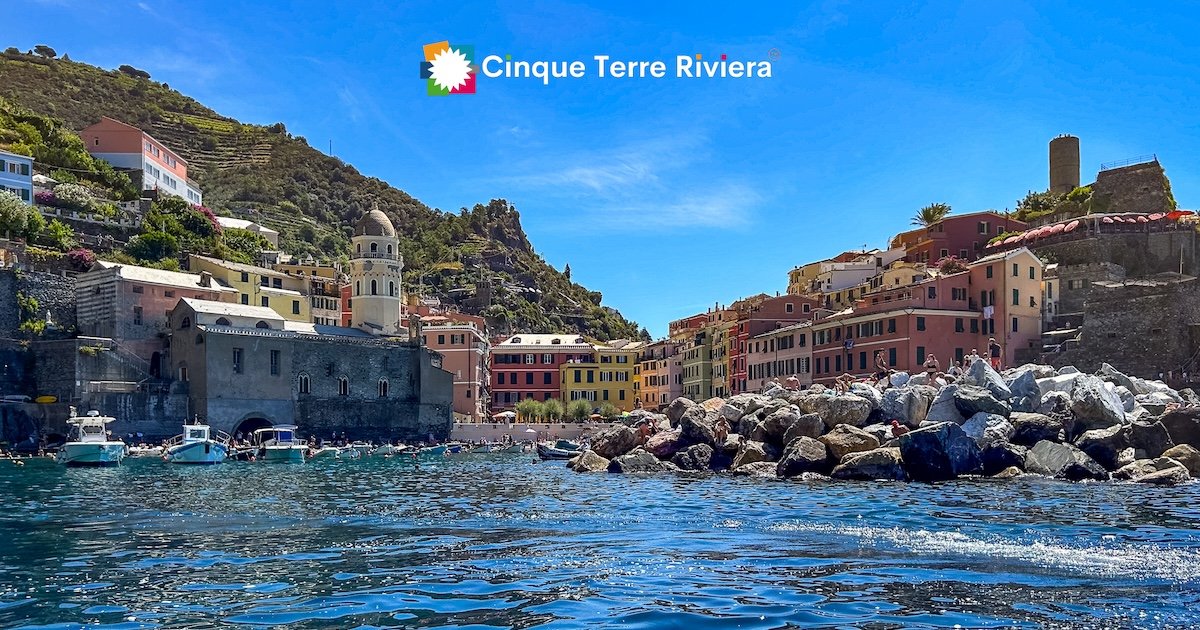
Ventegà means, quite literally, the place swept by the wind — the open terrace beside the small harbour, fully exposed to the sea breeze. On calm summer days it is where the young people of Vernazza gather to dive into the water. When the waves are high, it becomes a front-row seat to the power of the Ligurian Sea.
The name comes from the Vernazza dialect word for wind — vento — filtered through centuries of local pronunciation into something more alive, more physical. You do not just hear the word: you feel it.
Our apartment Ventegà takes its name from this spot. When the windows are open, you understand immediately why.
⛵ Mainetta — the little marina under the arches
Mainetta is the diminutive of marina — “the little marina.” The name refers to the row of medieval houses along the harbour front, a late-medieval palazzata whose ground-floor arches once sheltered the fishing boats of Vernazza. The fishermen would pull their boats up under those arches at the end of the day, and the sound of wood scraping on stone was the soundtrack of the evening.
Those arches are still there. The boats are fewer. But the name Mainetta survives in the dialect — and in the name of our Mainetta sea view apartment, looking out over the same water the fishermen watched every morning.
🏰 Muin a Ventu — the windmill tower that inspired Disney
Muin a Ventu means “windmill” in the Vernazza dialect — muin from the Latin molinum, a ventu meaning “by wind.” It refers to the ancient medieval tower that rises above the village, which local legend says was once used to mill grain using the power of the sea wind.
The tower is one of the most photographed silhouettes in all of the Cinque Terre — and it is said to have been the inspiration used by the artists at Disney Pixar when designing the village of Portorosso in the 2021 animated film Luca. Whether or not the legend is entirely true, anyone who has seen the film and then stood below the tower at dusk will find it very easy to believe.
The name Muin a Ventu is one of Tofa’s favourites — a compound of dialect and history that carries the whole character of Vernazza in four syllables. You can hear him speak about it in his recent reel on the dialect and traditions of Vernazza.
Today you can sleep inside the tower itself: our apartment Muin a Ventu occupies part of this historic medieval structure, with views that have not changed in seven centuries.
🔲 Recanissu — the colour of liquorice underfoot
Recanissu is the Vernazza dialect word for liquorice. The apartment took its name from the floors: the original graniglia tiles, laid in the deep black typical of old Ligurian craftwork, have exactly the dark, rich colour of liquorice root.
It is the kind of detail that only someone who grew up walking on those floors would notice — and the kind of name that only makes sense once you have seen them. The moment you step inside Recanissu, you understand immediately.
🎶 Tedea — the woman whose voice rang like a cathedral
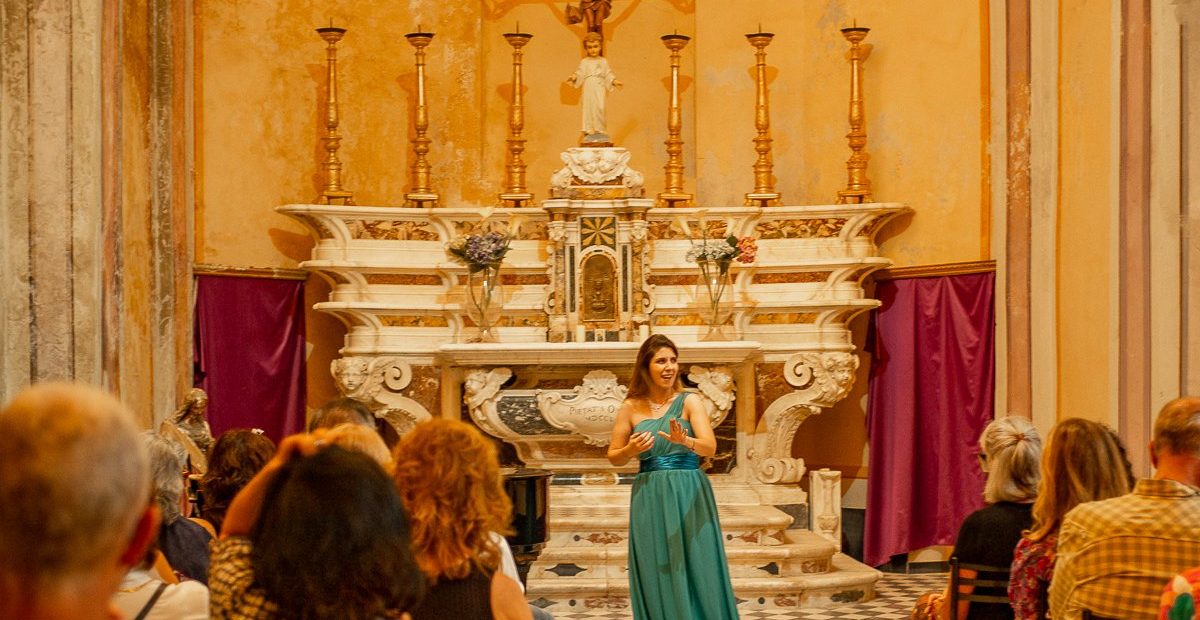
This is perhaps our favourite story. Tedea was a real woman who once lived in Vernazza — a farmer’s wife known throughout the village for her extraordinary voice. Every evening, from the terrace, she would call her children home from the terraced vineyards with a cry so powerful and so clear that it carried across the whole hillside.
The villagers, with the dry affection of people who have known each other for generations, gave her a nickname: Tedea — from the Te Deum, the ancient Latin hymn of praise sung in churches on the great feast days. To be compared to the Te Deum was, in Vernazza, the highest possible compliment for a voice.
Her name has outlived her. It now belongs to our Tedea — our largest and most exclusive apartment — two bedrooms, two bathrooms, with views over the sea that Tedea herself looked out on every morning when she called her children home.
Why we name our apartments this way
We have been renting homes in the Cinque Terre since 1991. Over three decades, we have learned that the best way to experience this place is not as a tourist but as a temporary local — to sleep in the same rooms, walk the same steps, look out over the same water that the people of these villages have always known.
Giving our apartments their dialect names is a small act of that philosophy. When you book Ventegà or Mainetta or Tedea, you are not booking a property with a code and a star rating. You are booking a place with a story — one that Tofa could tell you in verse, if you asked him nicely.
📚 Want to know more? Bartolomeo “Tofa” Basso was interviewed by journalist Melania Sebastiani for Città della Spezia in December 2025. His poetry, written in the Vernazza dialect since 1980, is a living archive of a world that no longer fully exists — and is all the more precious for it.
FAQ — The Vernazza dialect and our apartment names
❓ What language is spoken in Vernazza?
The local dialect is a variant of Ligurian, the regional language of Liguria, with its own distinct Vernazza pronunciation and vocabulary that differs even from neighbouring villages. It is a spoken language, rarely written, which makes Tofa’s poetry particularly precious as a written record.
❓ Is the Cinque Terre dialect still spoken today?
Among older residents, yes. Tofa, who is 97, considers the preservation of the dialect one of his life’s missions and taught it in local schools for twenty years. Among younger generations it survives mainly in place names, nicknames, and expressions — exactly the kind of living language that gives our apartments their names.
❓ What does “Cinque Terre” mean in dialect?
In standard Italian, Cinque Terre means simply “Five Lands” — the five villages of Monterosso, Vernazza, Corniglia, Manarola, and Riomaggiore. In the local dialect, each village has its own name and its own way of referring to the others, reflecting centuries of proud local identity.
❓ Did Disney Pixar really use Vernazza as inspiration for the film Luca?
The Pixar team visited the Cinque Terre extensively during research for Luca (2021). The fictional village of Portorosso draws on several Ligurian locations, and the tower of Muin a Ventu in Vernazza is among those cited locally as a visual reference. The resemblance is striking enough that many visitors arrive in Vernazza having already “seen” it on screen.
Cinque Terre Riviera · Concierge Office in Vernazza · Since 1991
www.cinqueterreriviera.com